

|
Krishna Jatropha & Bio-diesel Projects
GREAT
OPPORTUNITY FOR JATROPHA PLANTATION -
NEW FUEL
Jatropha is a very sturdy forest
shrub/tree having life of about
50 years. It is resistant to
high winds and drought. The tree
is rain fed plant and does not
require more watering after the
first two/three years. Jatropha
grows almost anywhere, even on
gravelly, sandy and saline
soils. It also does not require
any special care as regards to
fertilizers or pesticides. No
other maintenance is required
for the remaining life of the
plant.
Produce seeds worth Rs.20000/-.
And it is without any
expenditure on fertilizers,
pesticides, water or seeds.
There is initial expenditure for
plantation, which will start
paying in 2-3 years.
|
This being a sturdy
forest tree we can use
waste lands. Thus this
tree is selected
considering optimum
earning/acre with
minimum investment and
aftercare.The seeds
contain average of 35%
oil and yield about 75%
cake after cold pressing
of the seeds in screw
type oil expeller. |
|
Manpower is required
only for plucking of
pods and breaking them
in to seeds and it will
provide excellent
opportunities for rural
employment.
Jatropha plantation
provides not only
bio-diesel but also
other products such as
manure for the crops,
methane for power
generation and glycerol
for industrial use
besides, enormous
advantage of carbon
trading.
By-products from
Jatropha processing, are
increasingly being used
in modern industry for
cosmetics, varnishes and
paints, lubricants,
resins, adhesive, dyes
and inks, explosives,
pesticides, etc.
|
 |
|
Jatropha has the ability
to lift many people from
poverty to financial
independence, from
despair to respect and
unemployment to business
owners. |
Our Goal:
1.To utilize the large
tracts of cheap barren
land, large and
inexpensive rural
workforce to develop
alternative energy
options.
2.Explore how the
permanent exploitation
of the different aspects
of Jatropha might be a
real alternative for
transportation and
energy production, which
benefits four main
aspects of development
and secure a sustainable
way of life. |
|
Objectives of our
Mission:
1. Make Jatropha
plantation and
bio-diesel production a
low risk venture with
attractive returns by
value addition like
making Candle, Soap,
Cosmetic, Biogas,
Bio-fertilizer and
Bio-pesticides through
networking with
Entrepreneurs, Farmers,
Educated Youths, SHG and
NGOs.
2. Help attract private
investors in Jatropha
cultivation and
bio-diesel production
development.
3. Promote and recognize
endeavors to build
technical capacities of
rural entrepreneurs.
4. Help create new work
opportunities in
Jatropha cultivation,
bio-diesel production
related sectors.
5. Highlight
environmental and social
integration of Jatropha
cultivation and
bio-diesel production
systems in rural
communities.
6. Provide gender
sensitive socio-economic
and environmental
analysis of Jatropha
cultivation and
bio-diesel production
requirements in rural
communities .
|
Our Vision:
1. To promote Jatropha
plantation in 10,000
acres of land within the
State, which can
generate tremendous job
opportunities among the
rural masses. To set up
100 Nurseries to produce
1,00,000 seedlings in
each unit.
2. To set up 10 TBO
Gardens.
3. To set up 100 oil
extraction units
4. To set up 10
Bio-diesel Manufacturing
Plants. |
|
Our Scope of
Services:
We offer following
COMPREHENSIVE services
for Farmers/SHG/NGO/Entrepreneurs.
1. Establishment of
Nurseries to ensure best
planting material of
JATROPHA.
2. Providing proper
seedlings that will
yield high output, above
5 kg. per annum per
plant.
2. Plantation and
popularization of
JATROPHA in on going
system of farming.
3. Advise and assistance
for Intercropping of
important Herbals in
Multi tier farming
system.
4. Entering into 100 %
guaranteed buyback
agreements with small /
large scale JATROPHA
cultivators.
5. Oil Extraction and
other value added
services like making
Candle, Soap, Cosmetic,
Biogas, Bio-fertilizer
and Bio-pesticides.
6. Offering 100% buyback
of produced seeds & oil
at fixed rates.
7. Preparation of
Bankable Detailed
Project Report (DPR) for
Plantation of JATROPHA &
Bio-diesel Plant.
8. Supply of Equipments,
high-yielding Seeds,
Fertilizers & Organic
Manure incidental to
cultivation.
9. Supply, Installation
& Commissioning of Oil
expeller and Trans-esterification
plant for bio diesel
production.
10. Setting up
Bio-diesel based power
generators for rural
electrification in a
cluster of 50 remote
villages. |
|
Value Addition of
Jatropha
1. After getting 25 to
30% of the oil from the
seeds, balance yield is
70 to 75% of cakes. This
is a major by product of
bio diesel production.
2. This cake has also a
great potential of
providing additional bio
energy in the form of
electricity and biogas,
fertilizer and
pesticide. It is found
that I kg of cake
produces 0.5 m of gas,
which is almost six
times of gas produced by
I kg of cow dung.
3. Slurry from bio gas
plant can further be
processed as manure. The
slurry of the bio gas
plant can be
mechanically separated
into concentrate of rich
nutrients for using in
plantation. The dried
out slurry forms manure
for the agricultural
use. Both these products
can provide a major
substitute to chemical
fertilizers and
pesticides. |
BUSINESS
OPPORTUNITIES:
There are four sources
of income with our
project.
1. Nursery Raising &
Plantation Of JATROPHA
2. Extraction Of Oil &
Value Addition
3. Production Of
Bio-Diesel
4. Carbon Finance |
 |
| |
 |
 |
 |
|
INVESTMENT & BENEFITS IN
JATROPHA:
Nursery Raising &
Plantation Of JATROPHA:
JATROPHA cultivation
generates an income of
Rs.10, 000/- to Rs.20,
000/- per Acre and if
grown in 200 Acre in a
village, it can provide
adequate employment to
all landless workers all
through the year. The
plant after 2-3 years
can on an average
produce 2 kg of seeds
per plant. This output
will increase up to 4-5
kg after the maturity
and development of the
tree. Such 1000 trees
can be planted in one
acre of land.
1 Kg. of oil will be
available from 4 kg of
seeds. One acre can
produce 0.5 to 1.0 ton
of oil with Jatropha
plantation. The 1000
plants will provide 2000
kg to 4000 kg of seeds
to produce 0.5 to 1.0
ton bio diesel.
Considering present
average rate of Rs.5 per
kg for the seeds of
Jatropha 1 acre of
plantation can produce
seeds worth Rs.10000/-
to Rs.20, 000/-. This
production can be
obtained without any
expenditure on
fertilizers, pesticides,
water or seeds. There is
initial expenditure for
plantation, which will
start paying in 2-3
years.
To support farmers
financially and to build
up the confidence,
plantation of castor can
be undertaken in the
same land between the
rows of Jatropha plants.
Rain fed castor can give
immediate yield within
4-6 months. Oil
percentage in the castor
seeds is about 45 to
50%. Per acre output
will be about 8 quintals
to 10 quintals. The
price for castor is in
the range of Rs.8-10 per
kg and thus the initial
income per acre will be
in the range of Rs.8000
to 10000. This
plantation, however,
will need higher level
of expenditure on seeds,
fertilizers, pesticides
and watering besides
higher level of manpower
for cultivation.
Extraction Of Oil &
Value Addition
For integrated Oil
Extraction & Value
Addition production
Unit, suitable for
entrepreneurs in small
villages, the total
investment of
Rs.5,00,000 with the
income potential of
Rs.15, 000 to Rs. 20,000
per month. The
entrepreneurs can
manufacture Candle,
Soap, fertilizer,
pesticide, nutrients and
manure.
Production Of
Bio-Diesel
For Home Bio-Diesel
production Unit,
suitable for
entrepreneurs in small
villages, the total
investment is Rs.
3,00,000 with the income
potential of Rs.10, 000
to Rs. 12,000 per month.
For Industrial
Bio-Diesel production
units, the investment
ranges from Rs.10 Lac to
Rs. 1 Crore depending on
the production capacity
of the unit. Expected
maximum payback period
is around 24 months.
Carbon Finance
A solution to greenhouse
effect the Clean
Development Mechanism (CDM)
has been introduced. CDM
is one of the Kyoto
mechanisms; the CDM aims
to promote sustainable
development in
developing countries as
well as to help Parties
achieve compliance with
their Carbon Emission
Reduction (CER). It
allows investing in
emission-saving projects
in developing countries
and gaining credit for
the savings achieved
through the generation
of Carbon Emission
Credits that they can
use to contribute to
compliance with part of
their emission reduction
targets. Growing plants,
which are later
processed into fuel,
recycles the Carbon
dioxide released into
the atmosphere when
biofuel is burned. Thus,
the CO2 emission of
Jatropha oil can be
assumed almost zero.
For this reason, a
project, which aims to
exploit the potential of
Jatropha as energy crop,
owns all requisites to
be eligible within the
CDM. The carbon dioxide
absorption of 8 Kg. per
tree per Year can be
converted into Carbon
Credit Certificates
under the CDM Guidelines
of the Kyoto Protocol.
Including revenue from
carbon credits from
petro-diesel
substitution and
possibly carbon
sequestration and
nitrogen based
fertilizer substitution;
biodiesel projects
become considerably
financially attractive.
See Table below for CER
estimations for a 100
acres Jatropha
plantation
|
Possible CER
revenue for a
100 acres
plantation for
biodiesel
|
Sl. No. |
Variable |
AMOUNT |
|
1 |
Total
area in
Acres |
100 |
|
2 |
Trees
(per/acre) |
1000 |
|
3 |
Total
Trees |
100000 |
|
4 |
Total
Seeds
Collection |
100000
- 400000 |
|
5 |
Biodiesel
Production
(Litres/year) |
25000 -
100000 |
|
6 |
CERs
from
Biodiesel
(Tonnes
CO2
e/year) |
70 -
280 |
|
7 |
Risk
related
CER
price range
($) |
5-25 |
|
8 |
Expected
CER
revenue
($/yr) |
350-7000 |
|
Summery of
Investment &
Profit
|
SN |
Category |
Investment
(in
Lac) |
Subsidy
From
NOVOD
(in Lac) |
Annual
Turnover
(in
Lac) |
Payback
period
(in
Months) |
Annual
Profit
(in Lac)
|
|
1 |
Plantation
of
100
Acres of
Land |
10 |
03 |
12 |
36 |
10 |
|
2 |
Extraction
Of Oil &
Value
Addition |
03 |
0.8 |
3 |
06 |
|
|
3 |
BDPU
Home
100 Ltr./Day |
03 |
0.9 |
08 |
24 |
01.5 |
|
4 |
BDPU
Industrial
1 TPD |
25 |
6.0 |
80 |
30 |
10 |
|
5 |
BDPU
Industrial
10 TPD |
60 |
10 |
800 |
12 |
60 |
|
6 |
Carbon
Finance
100
acres
plantation |
NIL |
NIL |
NA |
NA |
0.2 –
3.0 |
|
|
Our Future
Planning
Each village of
Orissa has, on
an average, 50
acres of
non-cultivable
fallow land.
This land can be
leased to 10
families of
landless
labourers living
below the
proverty line.
Each family
would get five
acres plot to
plant bio-diesel
trees, build a
small house and
live there.
Family members
would water
these trees,
manure them and
nurture them to
maturity. Each
family in one
year, can
collect oil
seeds from the
tree planted on
its plot valued
at Rs.50, 000 –
Rs.60, 000 at
today’s price.
Besides this
each of them can
get extra
revenue from
intercropping of
various crops.
These 10 plot
holders should
form a group or
society, with a
local
ex-serviceman as
its chairman. He
should organise
intercropping
activities,
rainwater
harvesting, drip
irrigation,
collection and
delivery of
oilseeds to the
oil extraction
plant, payment
from the oil
extraction plant
and distribution
to plot holders
in proportion to
their supply of
seeds. He can be
paid a fixed
salary or some
commission.
In time to come,
society members
should be
encouraged to
raise at least
2-3 cattle and
also set up a
(Cow Dung &
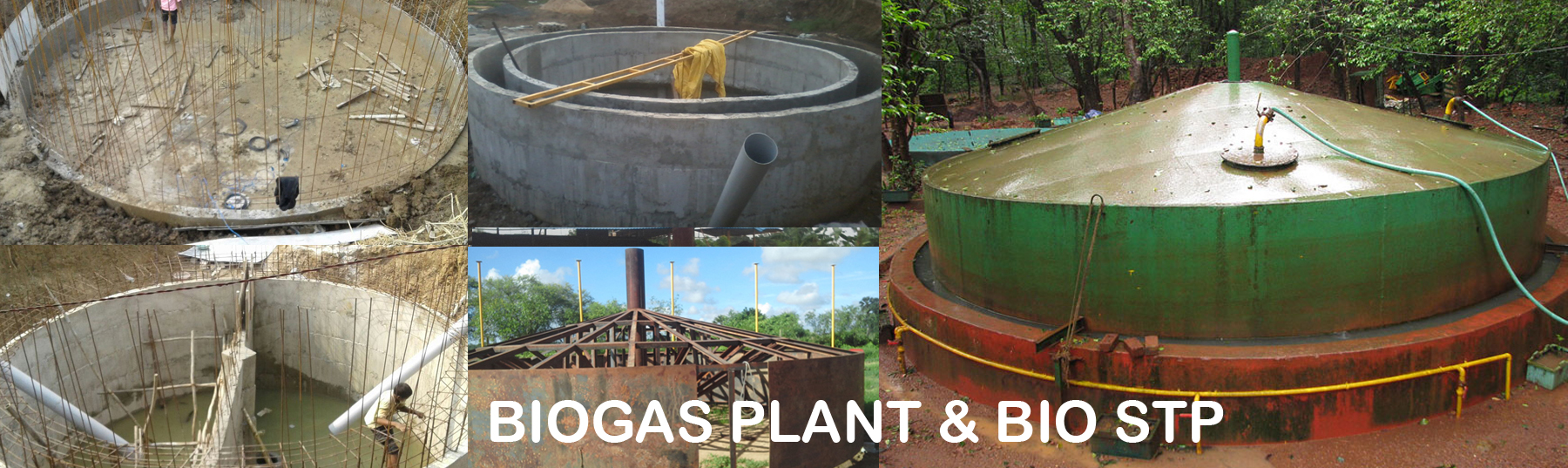
Oilcake) biogas
plant. The
oilcake that
remains after
oil extraction
is rich in
calorific value
and can be used
as bio-manure
and production
of biogas. The
produced biogas
can be used as
their cooking
meals and as an
energy source
for their
electricity. And
further it can
be bottled like
LPG and will be
used in
Vehicles. The
slurry from
biogas can be
marketed as
manure. |
|
A population of
10,000 can rise
above the
poverty line—10
families per
village in Two
Hundred
Villages. They
can produce
10000 ton of
bio-diesel to
meet the current
requirement of
diesel.
JOIN
HANDS WITH US AS
OUR FRANCHISEE
WE have
undertaken the
pioneering work
of jatropha
plantation the
promising
bio-fuel crop
with a mission
"GREENING THE
EARTH....
EARNING THE
RESOURCES FOR
RURAL MASSES".
We are committed
to change the
standard of life
of Rural Farmers
as this
potential crop
can bring about
major economic
activity
providing Income
and Employment
opportunities to
the rural
communities as
follows.
• Farmers would
earn from
jatropha farming
• Farm worker
would have
employment
• Small rural
enterprises
would sell or
purchase the
seeds
• Small scale
industries grow
for oil
Production/Extraction
• Diesel fuel
production would
further provide
business
opportunity
• By products
like press-cake
would be traded
by villagers
Energy
employment and
earnings would
go together
The Krishna
Jatropha &
Bio-diesel
Projects invites
you for
participation in
Franchisee
Network for
Cultivation/Plantation
of Jatropha,
Bio-diesel and
it’s value added
activity, as it
is a business
with national
and
international
scope & requires
minimum start up
capital. |
For further
details please
contact:
Krishna
Jatropha &
Bio-diesel
Projects
(A Unit of
Krishna
Engineers &
Consultants)
4723, Laxmi
Vihar, Sainik
School
Bhubaneswar –
751005
Email: info@krishnaenergy.com
/ krishnaenergy@gmail |
|
| |
|
|